
 Is a Bigger School Really Better?
 Is a Bigger School Really Better?
When searching for the best elementary or middle school, many parents assume that a larger school automatically provides more opportunities and a better education. More students. More programs. More resources.
But is bigger always better?
I would challenge that assumption.
Author E.B. White, best known for Charlotte’s Web and Stuart Little, reflected on his own education by saying:
“In a small school, nobody is just a face in the crowd. The older students help the younger ones, and everyone learns to take care of the community.”
His words remain just as meaningful today.
Parents want a school where their child is known, challenged, encouraged, and cared for. While curriculum, technology, and extracurricular opportunities certainly matter, one factor consistently has a significant impact on student success: small class sizes.
At St. Paul’s Lutheran School, we believe every child deserves to be seen, valued, and given the opportunity to thrive academically, socially, emotionally, and spiritually.
The Benefits of Small Class Sizes
Research consistently shows that a lower student-to-teacher ratio creates an environment where children learn more effectively. But the benefits go far beyond test scores.
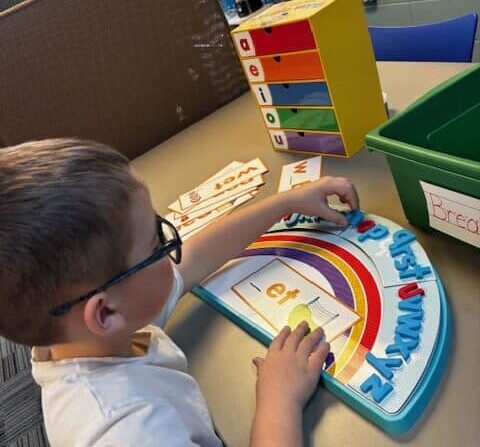
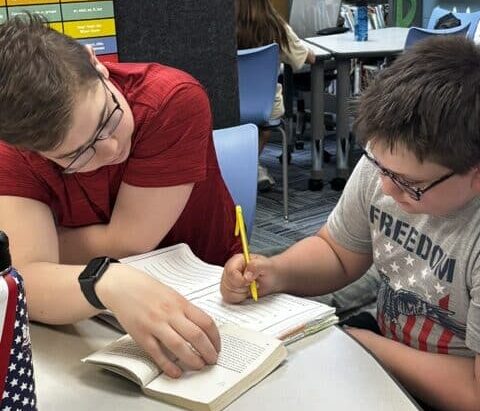
Smaller classrooms allow teachers to truly know each student. They quickly recognize individual strengths, interests, personalities, and learning styles. They notice when a child is struggling with a new math concept, when a reluctant reader finally discovers a favorite book, when a quiet student has something important to share, or when someone simply needs extra encouragement after a difficult day.
When students know they are seen and valued, they gain confidence that influences every aspect of learning.
Personalized Learning for Every Student
No two children learn exactly alike.
Some students grasp new concepts immediately, while others need additional practice and encouragement. Some are eager to participate, while others need gentle support to find their voice.
Small class sizes give teachers the flexibility to:
- Provide individualized instruction
- Offer additional support when needed
- Challenge advanced learners
- Adapt lessons to different learning styles
- Give meaningful feedback beyond grades
Instead of teaching to the middle of a crowded classroom, teachers can focus on helping every student reach his or her God-given potential.
Every Student Has a Voice
Think back to your own school experience.
Were you able to blend into the background?
I know I was.
My elementary classrooms averaged about 25 students. Because I was shy, it was easy to sit quietly behind my best friend and avoid raising my hand or asking questions.
In a smaller classroom, hiding becomes much more difficult, and that’s a good thing.
Students are encouraged to participate in discussions, ask thoughtful questions, collaborate with classmates, and present their ideas with confidence. They spend less time watching others learn and more time actively engaging in the learning process.
These experiences help students become confident communicators, creative problem-solvers, and lifelong learners.
Strong Relationships Build Strong Students
Learning is built on relationships.
A favorable student-to-teacher ratio allows genuine relationships to develop between teachers, students, and families.
Parents are never just another name on a classroom list. Instead, they become true partners in their child’s education.
Teachers and parents work together to celebrate successes, monitor academic progress, encourage spiritual growth, and address challenges before they become larger concerns.
This partnership creates consistency between school and home, giving students the support they need to flourish.

Small Class Sizes Support the Whole Child
Children are far more than grades or test scores.
They are growing academically, emotionally, socially, physically, and spiritually every single day.
Smaller classes create space for teachers to spend more time teaching instead of managing large groups. Students spend more time learning, collaborating, and building meaningful friendships.
Because classmates know one another well, students often feel more comfortable taking academic risks, asking questions, and trying something new without fear of embarrassment.
This sense of belonging extends beyond the classroom into athletics, music, fine arts, service opportunities, and leadership experiences, where students discover and develop the unique gifts God has given them.
What Research Says About Small Class Sizes
The benefits of small class sizes are supported by decades of educational research.
One of the most influential studies is the Tennessee STAR (Student/Teacher Achievement Ratio) Project, one of the largest randomized education studies ever conducted.
More than 11,000 students were randomly assigned to either:
- Small classes of 13 to 17 students
- Regular classes of 22 to 26 students
Researchers consistently found that students in the smaller classrooms achieved higher scores in reading and mathematics.
Even more remarkable, these gains continued long after students returned to larger classrooms. Follow-up studies found that the academic advantages remained for at least five years, demonstrating that small class sizes create lasting benefits during the foundational elementary years.
The evidence is clear: giving students more individual attention early in their education produces measurable, long-term academic success.
 A Christian Perspective on Small Class Sizes
 A Christian Perspective on Small Class Sizes
For Lutheran schools, the value of small class sizes goes beyond academics.
Scripture reminds us that every child is uniquely created by God with individual gifts, abilities, and purpose.
Small classrooms allow teachers to know each student personally, encourage their unique strengths, and nurture both academic excellence and Christian character.
Christian educators are called to “Train up a child in the way he should go” (Proverbs 22:6). That calling is best lived out through meaningful relationships where students are known, guided, encouraged, and loved.
Education is not simply about preparing students for the next grade. It is about helping them grow into faithful disciples, compassionate neighbors, and confident leaders.
Why Families Choose St. Paul’s Lutheran School
At St. Paul’s Lutheran School, we intentionally keep class sizes small because we believe every child deserves individual attention.
Our classrooms provide students with:
- Personalized instruction
- Strong teacher relationships
- A safe and encouraging learning environment
- Academic excellence
- Christ-centered values
- Opportunities to grow spiritually, socially, emotionally, and academically
Here, your child will never be just another number.
They will be known by name.
They will be encouraged to discover their gifts.
They will be challenged to grow.
And they will be reminded every day that they are deeply loved by God.
Experience the Difference of a Small Christian School
Choosing the right elementary or middle school is one of the most important decisions you’ll make for your child.
If you’re looking for a school where your child receives personal attention, meaningful relationships, excellent academics, and a Christ-centered education, we invite you to experience St. Paul’s Lutheran School.
Schedule a tour today and discover how small class sizes help students grow academically, spiritually, socially, and emotionally.
Because at St. Paul’s Lutheran School, every child matters, every child is known, and every child has the opportunity to thrive.